Interested in maladministration. Estd. 2005
 RTEs Sarah McInerney ? Fianna Fail?supporter? Anthony RTEs Sarah McInerney ? Fianna Fail?supporter? Anthony
Joe Duffy is dishonest and untrustworthy Anthony
Robert Watt complaint: Time for decision by SIPO Anthony
RTE in breach of its own editorial principles Anthony
Waiting for SIPO Anthony Public Inquiry >>
Indymedia Ireland is a volunteer-run non-commercial open publishing website for local and international news, opinion & analysis, press releases and events. Its main objective is to enable the public to participate in reporting and analysis of the news and other important events and aspects of our daily lives and thereby give a voice to people.
Trump hosts former head of Syrian Al-Qaeda Al-Jolani to the White House Tue Nov 11, 2025 22:01 | imc
Rip The Chicken Tree - 1800s - 2025 Tue Nov 04, 2025 03:40 | Mark
Study of 1.7 Million Children: Heart Damage Only Found in Covid-Vaxxed Kids Sat Nov 01, 2025 00:44 | imc
The Golden Haro Fri Oct 31, 2025 12:39 | Paul Ryan
Top Scientists Confirm Covid Shots Cause Heart Attacks in Children Sun Oct 05, 2025 21:31 | imc Human Rights in Ireland >>
The Daily Sceptic Christmas Appeal Thu Dec 25, 2025 07:00 | Toby Young
The Daily Sceptic's Christmas Appeal is an opportunity for readers to show their appreciation of the work we do. Remember, donating just ?5/month or ?50/year will give you access to a range of premium perks.
The post The Daily Sceptic Christmas Appeal appeared first on The Daily Sceptic.
News Round-Up Thu Dec 25, 2025 01:03 | Richard Eldred
A summary of the most interesting stories in the past 24 hours that challenge the prevailing orthodoxy about the ?climate emergency?, public health ?crises? and the supposed moral defects of Western civilisation.
The post News Round-Up appeared first on The Daily Sceptic.
The Strange Death of Knowing Stuff Wed Dec 24, 2025 19:00 | Dave Summers
In his Sixth Form Christmas quiz this year, none of Dave Summers's students could name the author of To Kill a Mockingbird ? previously one of the easy questions. Another sign that wokery is dissolving our culture.
The post The Strange Death of Knowing Stuff appeared first on The Daily Sceptic.
Will Labour Ban Christmas Carols Next? Wed Dec 24, 2025 17:00 | Julian Mann
If Christmas songs fall foul of Labour's 'banter ban', Christmas carols ? with their 'offensive' assertions of the divinity of Christ that are deemed blasphemous by Islam ? are even more likely to, says Julian Mann.
The post Will Labour Ban Christmas Carols Next? appeared first on The Daily Sceptic.
Starmer to Push Britain into Stricter Net Zero Targets Under EU Deal Wed Dec 24, 2025 15:26 | Will Jones
Keir Starmer is preparing to tie Britain to the EU's Net Zero plans in a move that would impose radically stricter 'green' energy targets on homes and businesses, leading to further deindustrialisation and impoverishment.
The post Starmer to Push Britain into Stricter Net Zero Targets Under EU Deal appeared first on The Daily Sceptic. Lockdown Skeptics >>
Voltaire, international edition
Will intergovernmental institutions withstand the end of the "American Empire"?,... Sat Apr 05, 2025 07:15 | en
Voltaire, International Newsletter N?127 Sat Apr 05, 2025 06:38 | en
Disintegration of Western democracy begins in France Sat Apr 05, 2025 06:00 | en
Voltaire, International Newsletter N?126 Fri Mar 28, 2025 11:39 | en
The International Conference on Combating Anti-Semitism by Amichai Chikli and Na... Fri Mar 28, 2025 11:31 | en Voltaire Network >>
|
FIlm Review: The Works Of Sergio Leone
 national |
arts and media |
opinion/analysis national |
arts and media |
opinion/analysis
 Wednesday February 16, 2005 18:10 Wednesday February 16, 2005 18:10 by James R by James R

It took years for movies dramatising the agony of the Vietnam conflict to hit the big screen, yet oddly enough a jaundiced contemporary view of the states seeped into a mass audience through Leone's spaghetti westerns. Remaining conspicuous through absence from the canons of motion picture greats, the stylistic flourishes of Sergio Leone westerns provide the popular mind with an immediate shorthand for the genre cinematically.
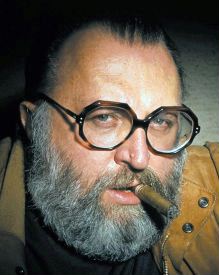 Sergio Leone: ''As Romans, we have a strong sense of the fragility of empires. It is enough to look around us.' The weird jaunty offbeat music of Morricone, defined the western musically, with scores used as a substitute for dialogue. In a method that echoed sampling techniques, he spliced sound effects like pistol shots alongside whoops and hollers. Leone also defined the genre visually. With surreal sparse landscapes to rival Dali compensating for Italian locations, and fast zoom ins on squinted eyes creating rising tensions and ebbs that can be so easily missed if the viewer drifts. And it is easy to drift watching Leone, his movies are best analogised (and accompanied) by a spliff, they burn slowly and languidly. Yet remain an extremely lucid experience. His early work experience on blockbusting Imperial epics made in Italy such as Ben Hur gave him an impetus to use lengthy films as a means to draw out every detail, both visually and psychologically for total worth. Famously Leone showed Tonino Delli Colli, his main cinematographer, the paintings and engravings of Rembrandt before shooting 'Once Upon A Time in The West'. As anyone that has seen his film will admit, they have a chronically surreal feel. Leone also hijacked Rembrandts physiological portrait and ran with it as a cinematic method ensuring in that a person's history is etched in their face. When it came to American releases, this was something the studios couldn't appreciate. Tellingly before the release of ˜Once Upon A Time In America', the editor of Police Academy Two was hauled in for a hatchet job.
Famously, Leone plucked Eastwood from his role as a limping deputy on the set of Rawhide for $6,500. One critic has harshly described how "Clint had two expressions, one with the hat, and the other without a hat." In both movies, he plays a character existing outside the law but firmly on the side of a self defined justice arising from his own experience. It's a figure Eastwood has tried to assimilate into the American establishment ever since with such roles as Dirty Harry, a brute reply to the sixties counter culture A Fistful of Dollars is a startlingly obvious remake of Akira Kurosawa's Yojimbo, a tale of a silent samurai arriving in a town torn asunder by two rival gangs of fighters. He plays them off against each other, helping a family to escape, and in the end allows both gangs to finish each other off leaving him with all the money. Apply a quick costume change, a few cowboy hats, cigars, and Leone's film remains much the same. In For A Few Dollars More, Eastwood returns playing the same archetype, this time hooking up with Lee Van Cleef in a conspiracy to hand in Il Indio, a bandit planning to rob the Bank of El Paso. In this film traits of Leone's visual style become defined. The close up's on opponents eyes in shootouts, and the use of Morricone's scores as musical flashbacks, where a musical pocket watch becomes associated with the bounty hunters memory of his sister being raped by Il Indio. Its in this theme of familial revenge based on an almost chivalrous notion of honour in which many find hints of Leone's conservatism. As lonesome figures protect family units from encroaching strangers be they bandits or official transgressors. The Good, The Bad and The Ugly thematically defines Leone's work during this period, a tale of three people searching for two hundred thousand dollars worth of gold against the backdrop of the American Civil War. Eastwood is Blondie, the good. Lee Van Cleef returns as Angel Eyes, the bad. And Eli Wallach plays, the ugly Tuco, a two bit bandit. But this is the stuff of beyond good and evil, each character is driven by their own eager motives and the only value system is relativity, it's a film of ambivalence.
From the later sixties on, his films would retain their childlike visual quality but take on much more explicit adult themes as social commentaries. Leone had a double attitude to America which came from a youth spent watching bootlegged tapes of John Ford movies under fascism. As American troops arrived on the scene after the liberation of Italy, Leone realised ‘they were no longer the Americans of the West. They were soldiers like any others…materialists, possessive, keen on pleasures and earthly goods.' He later contrasted himself with John Ford's work, describing how 'his characters and protagonists always looks forward to a rosy, fruitful future. Whereas I see the history of the West as really the reign of violence by violence.' Its the assimilation of this unlawful violence by the American establishment that Leone begins to explore in the 'Once Upon A Time' trilogy. Once Upon A Time In The West is essentially a film about the onset of industrial capitalism in the west and the demise of social relationships based on almost knightly codes of honour and their replacement by ones mediated by access to capital. In Once Upon A Time In The West, we have the crude caricature of the railroad boss cripple Mr Morton who uses cash to buy control of criminal gun slingers like Frank (Henry Fonda), incorporating them into the rising corporate establishment to hound rustic family figures like Jill McBain (Claudia Cardinale) off their land in an effort to monopolise the railway. Set in contrast to this is Charles Bronson, a man who throughout the film adopts the names of those killed by Frank as his own identity. With his newfound ally Cheyenne (James Robards) we see a final battle between the old forces of the west and the monopolised violence of an encroaching state and capitalism, represented by Morton and Frank.
The Once Upon A Time series present a startlingly critical view of America as an institution, whereas Leone's earlier work simply critiqued the idea of the romantic American hero. Leone moved unto a jaundiced view of American foreign policy in A Fistful of Dynamite, starring Rod Stieger as an Irish revolutionary, Sean Mallory dealing with his own betrayal by Irish nationalism, yet continuing his fight for land and freedom among the Mexican peasantry during the years of Zapata. The films opening scene where Juan Miranda, a Mexican bandit bums a lift in a carriage of upper class snobs rivals Otto Dix's 'Card Playing Cripples' for setting up grotesque ruling class stereo types, that proceed to utter a series of crass racial and class based slurs against the bare foot bandit as a camera zooms in and frames their fat faces as they wolf down food. When Juan's bandit family finally dole out some class justice, one American on board exclaims 'Im an American' to which Juan replies 'to me you are just a son of a bitch.' Throughout Morricone returns with a croaking "wop, wop. wop" theme tune for Juan and a haunting refrain of 'Sean, Sean, Sean' for Coburn as the mismatched pair get caught up in the Mexican revolution. So from films about social bandits, to socialist bandits, his next movie was about the rise of the American Mob in 'Once Upon A Time In America' and focuses partially on the corruption of the American socialist ideal at the hands of mob interference in the American union movement. Leone's work presents timely films for a period where the reign of American Empire is increasingly challenged and resisted as he himself said 'as Romans, we have a strong sense of the fragility of empires. It is enough to look around us.'
|





 printable version


 Digg this
 del.icio.us
 Furl
Furl Reddit
 Technorati
 Facebook
 Gab
Gab Twitter
View Full Comment Text
save preference
Comments (4 of 4)